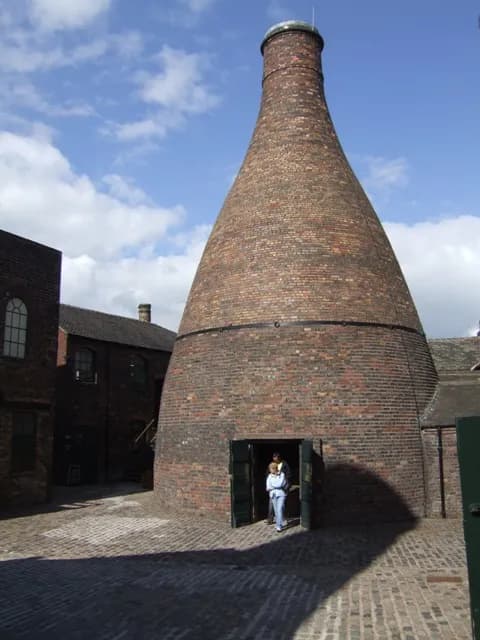
The Gladstone Pottery Museum stands as one of the last tangible links to Stoke-on-Trent's industrial past, housing four of the fewer than 50 surviving bottle ovens in the city. This Grade II* listed complex in Longton preserves not only the machinery and methods of ceramic production, but the very structures that once fired the wares that made "The Potteries" famous worldwide.
From Factory to Heritage Site
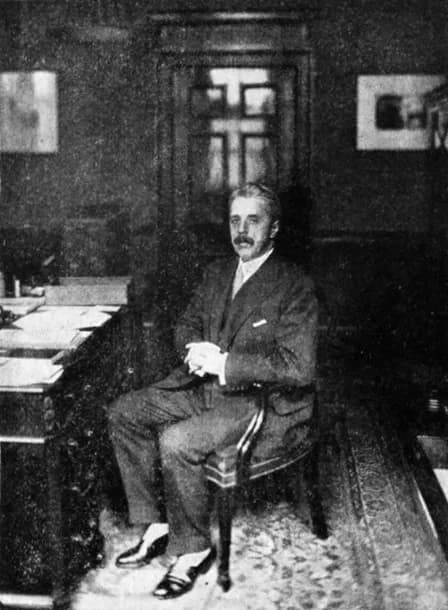
A pottery first opened on the Gladstone site in 1787, operated by the Shelley family producing earthenware. The site was purchased in 1789 by William Ward, who divided it into two works: Park Place Works (later Roslyn) and Wards Pot Bank. The complex was renamed "Gladstone" in 1876 after politician William Ewart Gladstone; the Gladstone family maintained a connection to the site through the Gladstone Vase, created by Frederick Alfred Rhead and presented to W.E. Gladstone by the Liberals of Burslem in August 1888.
The pottery ceased production in 1970, and the buildings were saved from demolition by a group of conservationists who established the museum in 1974. The site's significance was recognised in 1976 when it was awarded National Heritage Museum of the Year. Today it is included in the European Route of Industrial Heritage.
The Bottle Ovens: Stoke's Vanishing Landmarks
The bottle oven takes its name from its shape, not its contents: a cylindrical chamber with a domed roof, protected by an outer hovel that creates an updraught. The walls are 30 centimetres thick. Gladstone contains two biscuit ovens, two larger glost ovens, and two enamel kilns (the latter brought in from elsewhere).
These ovens represent a vanishing industrial heritage. Only 47 bottle ovens remain standing across Stoke-on-Trent, all of them listed buildings. The largest concentration is found in Longton within its conservation area.
Firing these ovens was a resource-intensive process. Each firing consumed 14 tons of coal, with thermal efficiency so low that approximately 70 per cent of energy was lost as waste heat. Temperatures reached 1,250 degrees Celsius in biscuit kilns and between 700 and 850 degrees Celsius in enamel or muffle kilns.
The Clean Air Act 1956 precipitated the decline of bottle oven firing, with commercial firings ceasing by the end of 1963. The last documented firing for posterity took place in 1978. Furlong Mills in Burslem continued using bottle ovens for flint calcination until the 1990s, making it the last commercial site in the United Kingdom.
The Human Labour Behind the China
The museum tells the story of the workers who operated these ovens. Placers were responsible for loading and unloading saggars, the fireclay boxes that held the pottery during firing. A loaded saggar weighed approximately 25 kilograms, and saggars were stacked in bungs (columns) 12 to 13 high. Each saggar lasted approximately 40 firings before needing replacement.
Conditions were demanding. The museum acknowledges that child labour was once common in the industry; records show Thomas Cooper employed 26 children in the 1850s.
Current Status and Recent Challenges
The museum faced a significant threat in 2022 when Stoke-on-Trent City Council proposed closing it for five months each year (operating only April through October) and marketing the site for filming during closure periods. The plan involved cutting 19 full-time posts and targeting £560,000 in savings from the museums service.
The proposal prompted a public outcry, with nearly 20,000 people signing a petition against the closure. Peter Wilson, chair of the Friends of the Potteries Museum, stated: "For Gladstone to close for five months we think is totally unacceptable. We really find the plans appalling."
The council subsequently revised its plan, agreeing to open the museum during February half-term and the Christmas period. Council leader Abi Brown acknowledged that "footfall is falling and there is an urgent need for renewal." The Levelling Up white paper committed the government to work with Stoke to enhance ceramics heritage.
Exhibitions and Collections
Beyond the bottle ovens, the museum houses a tandem compound steam engine by Marshall & Sons of Gainsborough, now turned by electric motor. Visitors can explore the engine house, slip room, saggar-making workshop, and a tile history gallery.
The sanitary ware gallery displays privies, earth closets, and water closets, telling the story of ceramic sanitation ware. In February 2023, the museum displayed ceramics from the Josephine Willis shipwreck, which sank in 1856 with the loss of 70 lives. The wreck was granted government protection in February 2023. Items displayed included pieces by Armitage, Davenport, Longport, and Charles Meigh & Son, including a complete toilet bowl with an Armitage back stamp.
Councillor Lorraine Beardmore, cabinet member for culture, said: "We are extremely proud to be the custodians of this rare and historically fascinating collection of Staffordshire ceramics."
From Firing Kilns to Filming Sets
The transition from working pottery to heritage site has seen Gladstone adapt to new purposes. The museum has become a popular filming location since production ceased. The Great Pottery Throw Down has filmed at Gladstone since 2020, having moved from Middleport Pottery in Burslem.
Other productions filmed on site include The Colour Room (2021, a Clarice Cliff biopic), The Irregulars (2021, Netflix), and Doctor Who ("The Trial of a Time Lord", parts 13-14, 1986). Television programmes including 24 Hours in the Past (BBC One, May 2015), Tony Robinson's The Worst Jobs in Britain, programmes presented by Alan Titchmarsh, and Blue Peter have also featured the museum.
Stoke's Ceramic Heritage in Context
Stoke-on-Trent's connection to ceramics dates to the 17th century. The six towns federated in 1910: Burslem, Fenton, Hanley, Longton, Stoke-upon-Trent, and Tunstall. The city received its charter in 1925 from King George V. Its motto, "Vis Unita Fortior" (United Strength is Stronger), reflects this federation.
The Trent and Mersey Canal, completed in 1777 with Josiah Wedgwood cutting the first sod in 1766, enabled the industry's expansion. Josiah Spode introduced bone china at Trent in 1796; Thomas Minton opened his manufactory nearby. The area became home to historic companies including Royal Doulton, Dudson, Spode, Wedgwood, Mintons, Burleigh, and Moorcroft.
Notable ceramic artists from the region include Clarice Cliff, Susie Cooper, Charlotte Rhead, Frederick Hurten Rhead, and Jabez Vodrey. Contemporary makers including Emma Bridgewater and Middleport Pottery continue the tradition; Middleport Pottery has been described as "arguably the only working Victorian pottery in Stoke."
Community and Cultural Significance
The museum runs events throughout the year, including Halloween ghost walks, Christmas carol concerts, Easter egg hunts, and summer pottery workshops. These activities connect contemporary Stoke residents to their city's industrial heritage.
The 2022 controversy demonstrated the museum's importance to local identity. The petition and public response showed that residents view Gladstone not merely as a heritage attraction, but as a guardian of Stoke's ceramic soul; the physical evidence of an industry that employed generations and created the city's reputation worldwide.
With its bottle ovens, machinery, and collections, Gladstone Pottery Museum remains one of the few places where visitors can experience the scale and atmosphere of Victorian pottery production. As the number of surviving bottle ovens continues to dwindle, the museum's role in preserving this heritage becomes ever more critical.