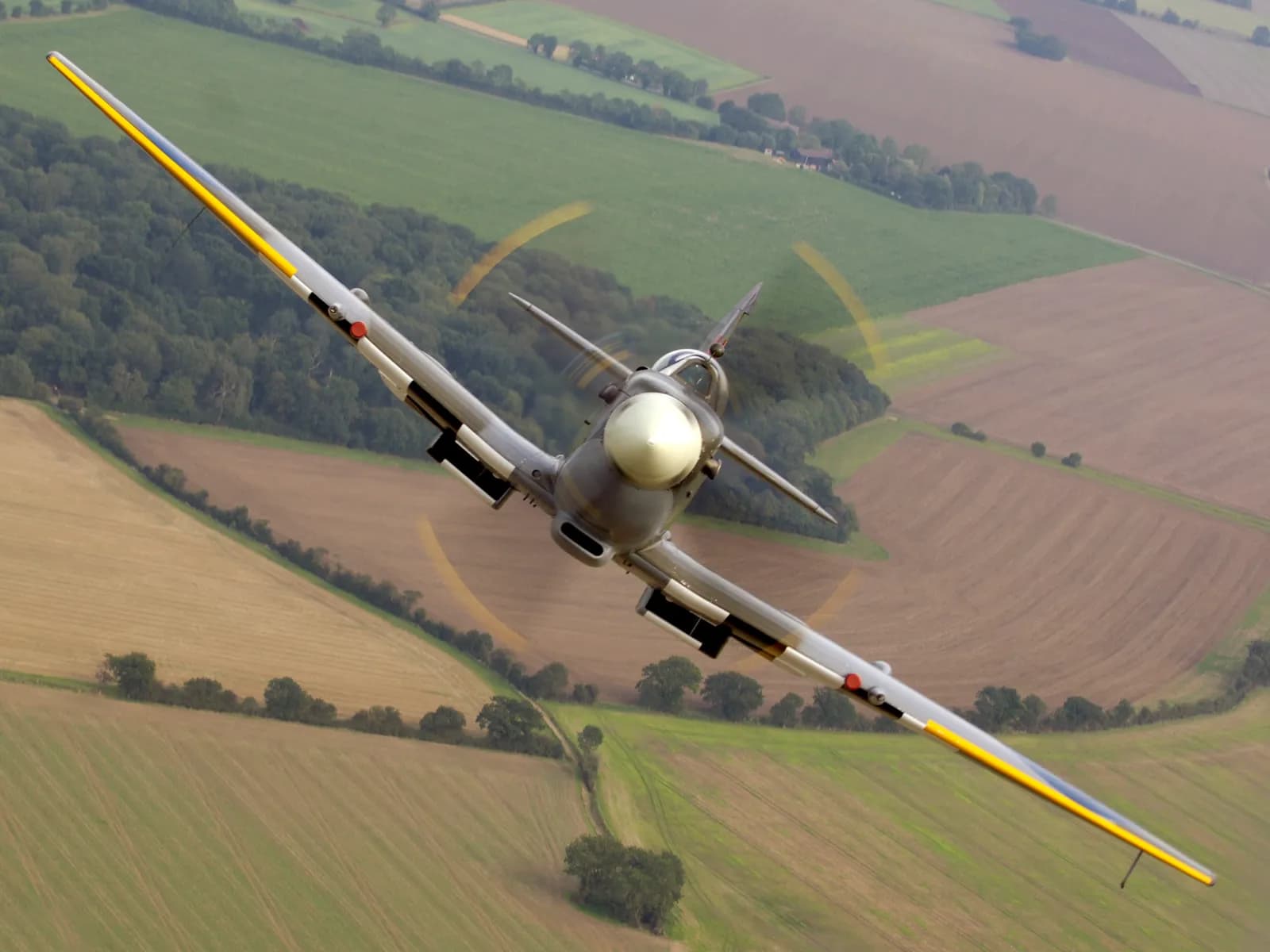
Born in Butt Lane and educated in Hanley, Reginald Joseph Mitchell began his working life as an apprentice in Fenton before designing the aircraft that would become synonymous with Britain's survival in the Second World War.
Early Years in Stoke
Mitchell was born on 20 May 1895 at 115 Congleton Road, Butt Lane, Staffordshire. His father, Herbert Mitchell, was a headmaster in the Stoke area who helped establish the printing firm Wood, Mitchell and Company Ltd in Hanley. The family lived in Normacot, a suburb of Stoke-on-Trent.
Young Reginald attended Queensberry Road Higher Elementary School from the age of eight before progressing to Hanley High School. On 28 September 1929, by then a celebrated aircraft designer, Mitchell returned to his old school to address the Debating Society. The school would later honour its most famous pupil by renaming West House "Mitchell House."
The Fenton Apprenticeship
In 1911, aged sixteen, Mitchell left school to begin a "Premium Apprenticeship" with Kerr Stuart and Company of Fenton. The firm, one of the Six Towns' prominent locomotive manufacturers, operated engineering works in Stoke-on-Trent. Mitchell spent five years at the Fenton works, learning the fundamentals of engineering that would underpin his future aircraft designs.
Fenton itself has sometimes been called "the Forgotten Town" of Stoke-on-Trent, yet it was here that the man who would design the Spitfire first honed his craft.
The Road to Supermarine
In 1916, aged twenty, Mitchell left Stoke for Southampton to join the Supermarine Aviation Works. His rise was swift: assistant to owner Hubert Scott-Paine in 1917, Chief Designer in 1919, Chief Engineer in 1921, and Technical Director by 1927. Between 1920 and 1936, he designed twenty-four aircraft.
Mitchell's crowning achievement before the Spitfire came with the Schneider Trophy. His Supermarine S.6B won the trophy in 1931, and he was awarded the CBE on 29 December that year.
The Spitfire Takes Flight
Work on the Type 300 design, which would become the Spitfire, began in November 1934. The prototype, K5054, first flew on 5 March 1936. Mitchell did not live to see his creation's finest hour: he died of rectal cancer in Southampton on 11 June 1937, aged just forty-two.
Yet the aircraft he designed would go on to become the only British fighter produced continuously throughout the Second World War. More than 20,351 Spitfires were built. During the Battle of Britain, the Spitfire captured the public imagination and achieved a higher victory-to-loss ratio than its counterpart, the Hurricane.
A Local Hero Remembered
Stoke-on-Trent has not forgotten its most celebrated engineer. The Mitchell Memorial Youth Arts Centre, now known as the Mitchell Arts Centre, opened on Broad Street in Hanley on 28 October 1957. Group Captain Douglas Bader, the legendary RAF pilot, performed the opening ceremony.
The theatre was funded by a public appeal launched in February 1943 by Lord Mayor Charles Austin Brook. Mitchell's widow supported the project, and £20,000 from the memorial fund was eventually directed to the University of Southampton for engineering scholarships.
Every Spitfire that took to the skies during the Battle of Britain carried the engineering genius of a boy from Butt Lane who learned his trade in Fenton. From locomotive works to legend, Mitchell's journey remains one of Stoke's proudest stories.